
Even with intangible goods, you wouldn’t want to expense the cost a patent the very first year since it offers benefit to the business for years to come. Thats why the costs of gaining assets throughout the years are significant because the company can continue to use it https://www.bookstime.com/ or create revenue from it. Amortization is the way accountants assign the period concept in financial statements based on accrual.
thoughts on “Depreciation vs. Amortization: An Overview of Depreciation and Taxes”

No matter which method you decide to use, best of luck as you move your organization forward. Where a bigger (and more costly) challenge can arise is if a business owner chooses the wrong type of depreciation for an asset. This is why it’s a best practice to work with your accountant to make sure depreciation vs amortization you are depreciating your assets correctly.

Benefits of amortization and depreciation
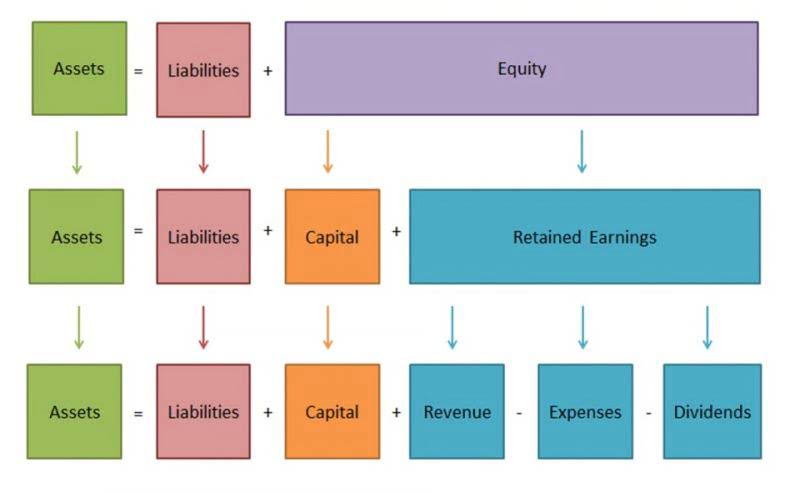
While both terms relate to the allocation of the cost of assets over time, they apply to different types of assets and have distinct implications for financial reporting and tax purposes. Depreciation applies to tangible assets like property, plant and equipment. It spreads out the cost of a tangible asset over its useful life to match the asset’s cost to the revenue it helps generate. For example, a piece of equipment that costs $10,000 and has a 5-year useful life would be depreciated at $2,000 per year using the straight-line depreciation method. Depreciation typically relates to tangible assets, like equipment, machinery, and buildings. Amortization, however, involves intangible assets, such as patents, copyrights, and capitalized costs.

Depreciation vs. Amortization: What’s the Difference
- Depreciation is an accounting term that refers to the process of cost allocation of tangible assets.
- Most small businesses use the Modified Accelerated Cost Recovery System (MACRS), which allows you to deduct more in the early years, benefiting cash flow.
- Depreciation and amortization are fundamental concepts in accounting and finance, essential for accurate financial reporting, tax planning, and business strategy.
- The purpose of depreciation and amortization is to spread the cost of an asset over its useful life.
- For example, if a company spends $100,000 on a patent that has a useful life of 10 years, it would amortize the cost of the patent at a rate of $10,000 per year.
This can be done through depreciation or amortization, depending on the type of asset. The cost recovery deduction can help reduce a business’s taxable income and lower its tax liability. Another difference is the method of determining the estimated resale or economic value of the asset at the end of its useful life. For tangible assets, the estimated resale value is based on the asset’s physical condition, market demand, and other factors. For intangible assets, the estimated economic value is based on factors such as the asset’s remaining legal life, market demand, and other factors. Both amortization and depreciation are non-cash expenses because they do not involve actual cash outflows during the period.
- The process of spreading the cost of an intangible asset over its useful life.
- With this method, the business adds the digits of the asset’s useful life, with the resulting total representing a denominator.
- But, in a disruptive decision of 2001, the Financial Accounting Standards Board (FASB) disallowed the amortization of goodwill as an intangible asset.
- This requires regular reviews of the software’s useful life and residual value.
- For example, suppose Company A buys a machine for $10,000, with an estimated useful life of 5 years and a salvage value of $2,000.
Balance Sheet
Remember, when you’re uncertain about these calculations or their tax implications, reaching out to an accounting professional is a wise decision to ensure compliance and precision. The remaining principal, or loan balance, must be paid back in full by maturity, or else the borrower is in a Payroll Taxes state of default (and is now at risk of becoming insolvent). For example, the section where the D&A expense is recognized is highlighted in the screenshot below of Alphabet’s income statement.
- If an organization wants to change the method of depreciation, then the retrospective effect is to be given.
- Amortization provides a structured approach for intangible assets, while depletion addresses the unique characteristics of natural resources.
- This is because the interest is calculated based on the outstanding balance, which is higher at the beginning of the loan.
- One can compare their equipment to determine the state and the remaining use of the physical asset.
- The only difference is that depreciation applies to tangibles while amortization applies to intangibles.
- For example, an asset costing $21,000 with a $1,000 salvage value and a useful life of ten years would depreciate at $2,000 per year under the straight-line method.